Seed Chandelier
Antwerp, 2025
The new scenarios posed by climate change demand collective planning and adaptive strategies as we respond to increasingly unpredictable environmental shifts. The rapid advance of desertification is making it impossible for many plant species to move naturally toward latitudes that match their ecological needs, putting countless species at risk of extinction.
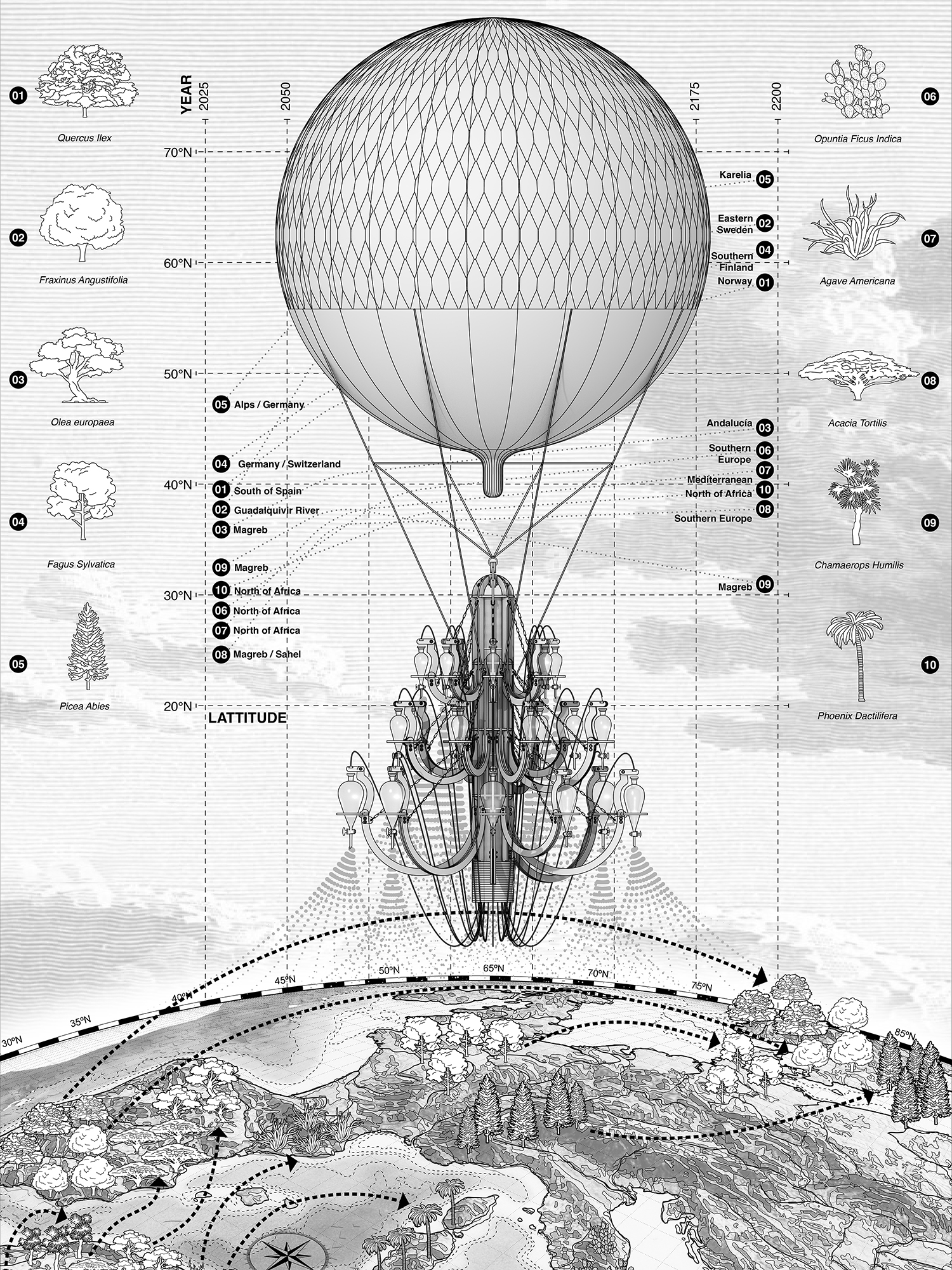
In response, assisted migration has emerged as a viable solution. This approach involves introducing endangered species beyond their original ecoregions, to habitats where their survival prospects are higher, thereby preserving biodiversity and restoring ecological balance.
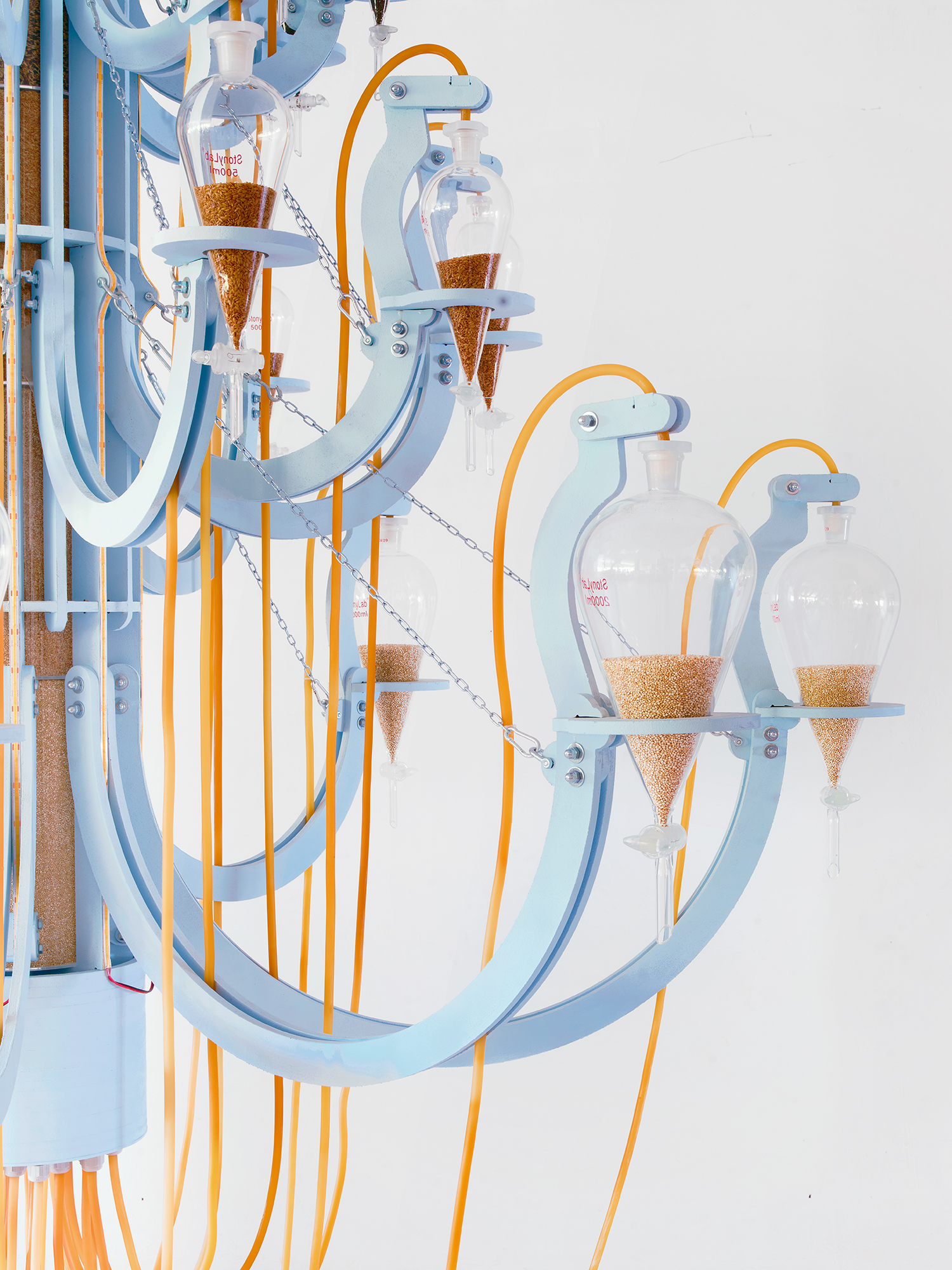
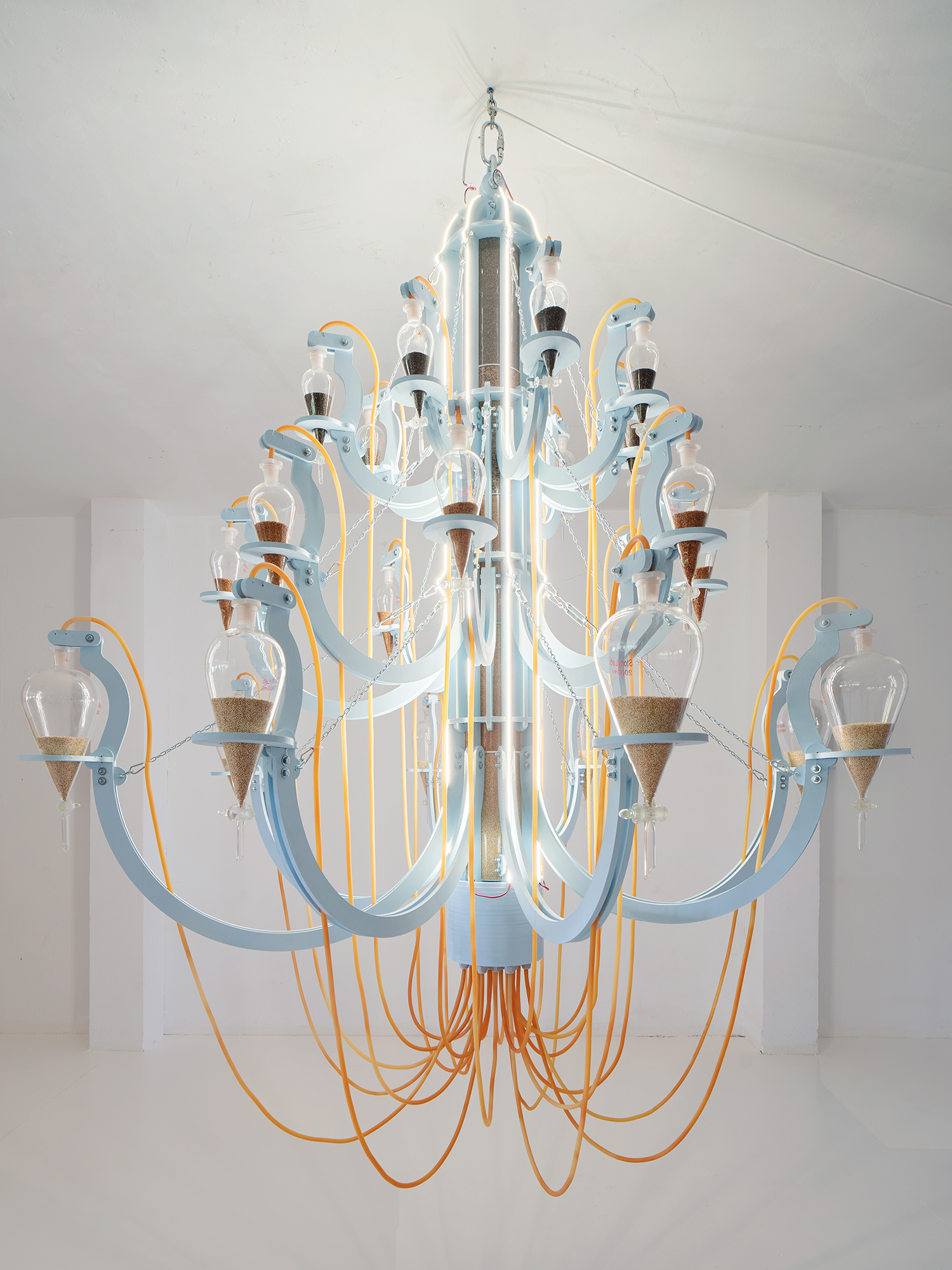
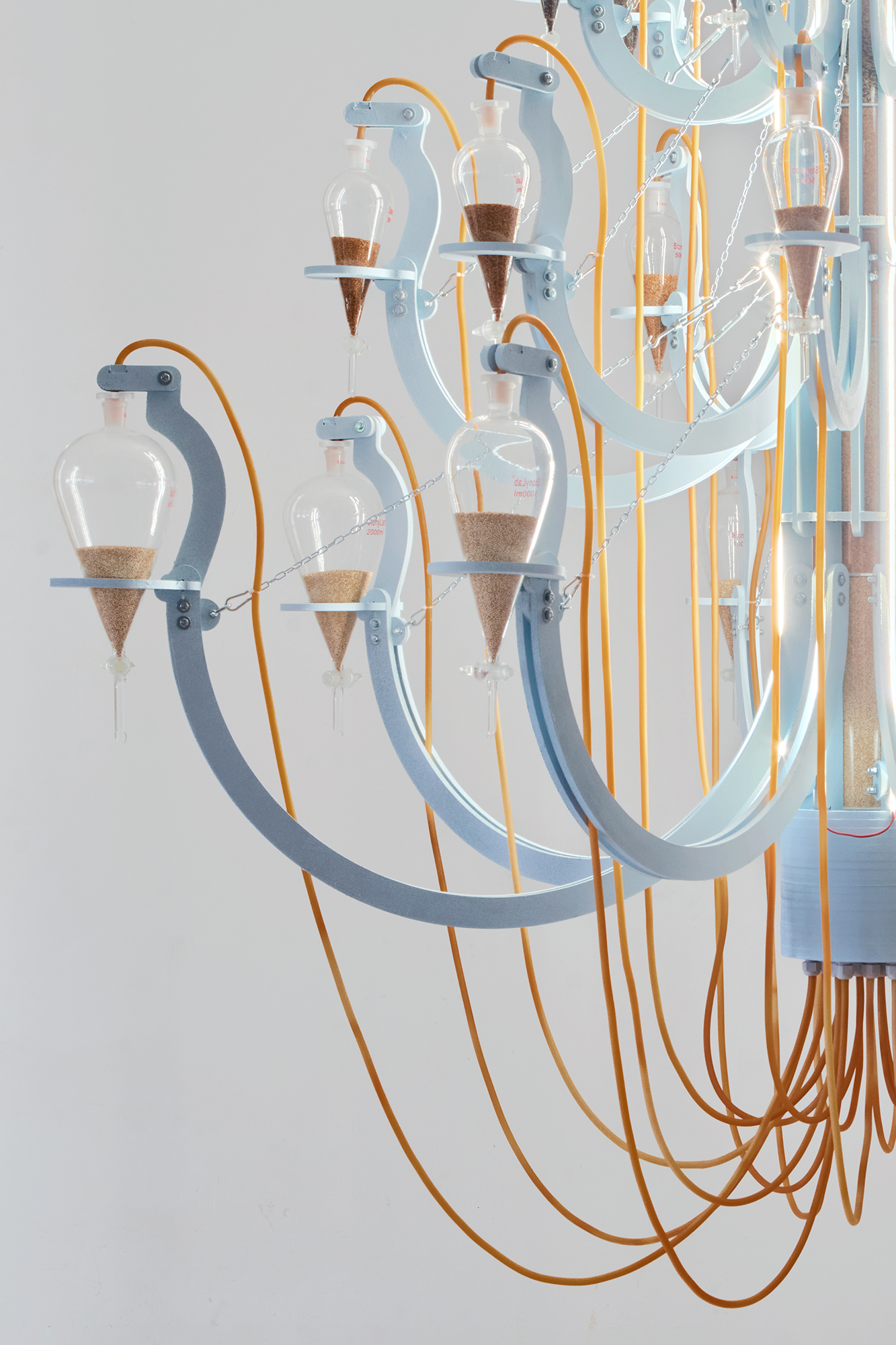
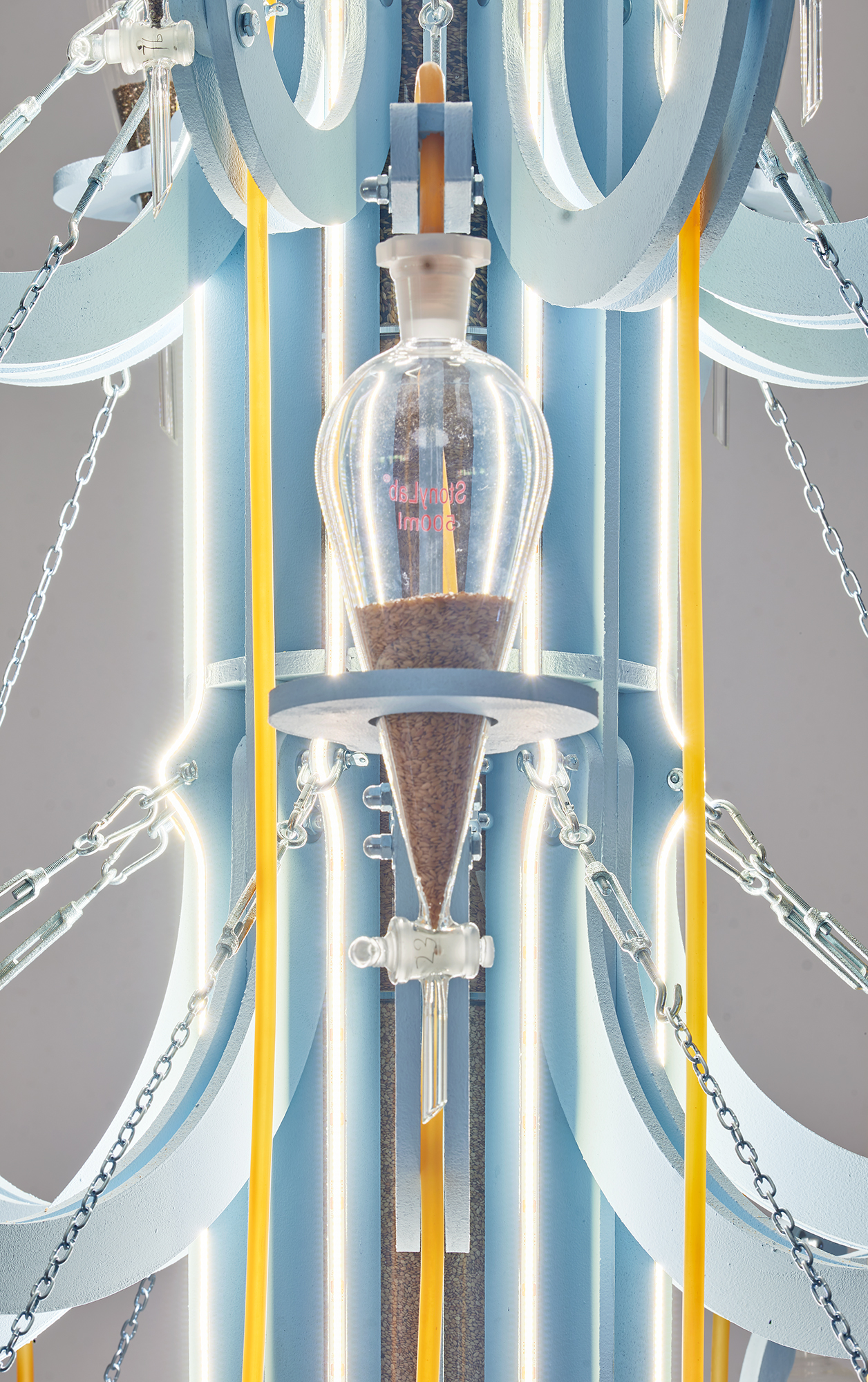
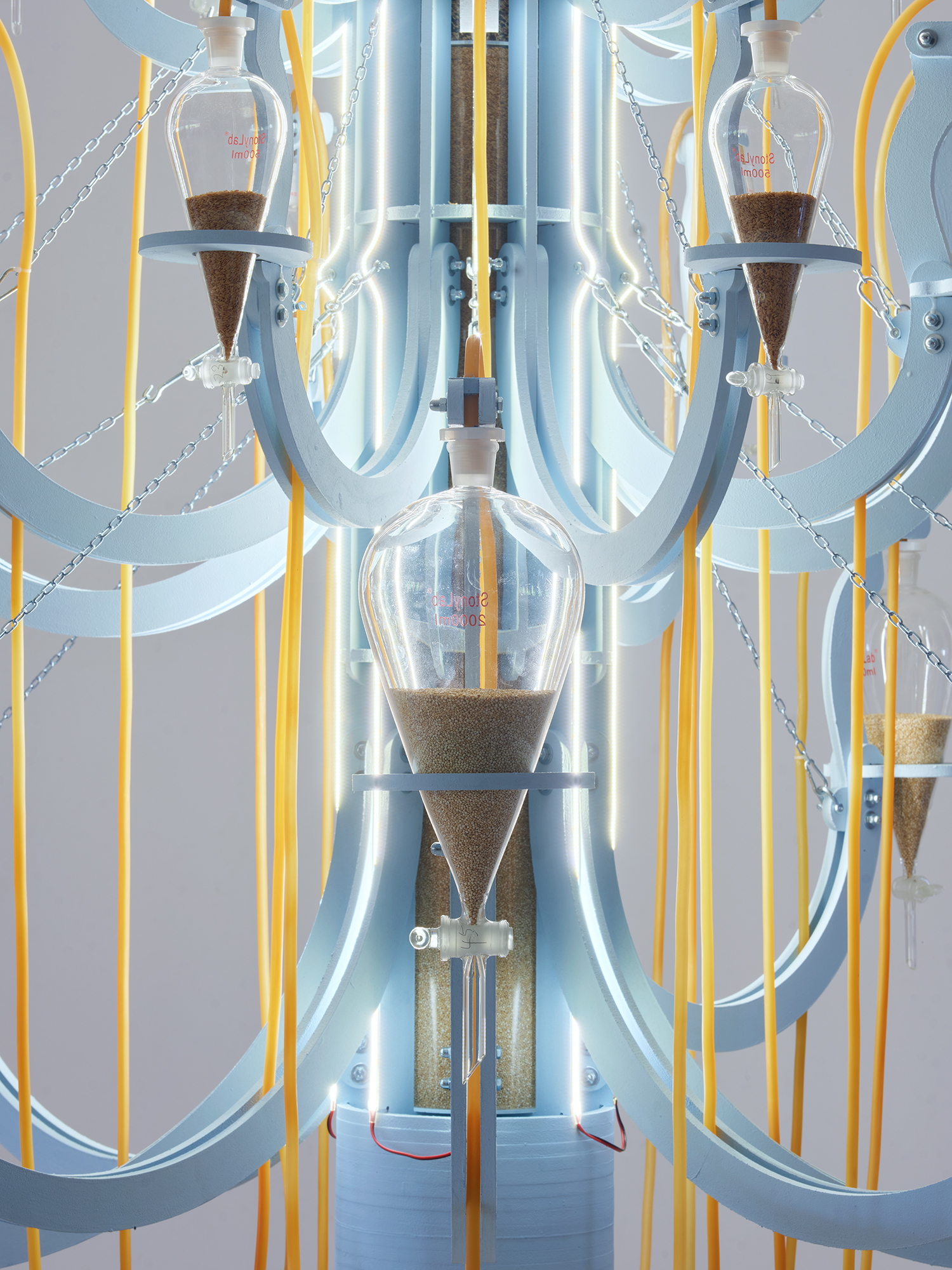
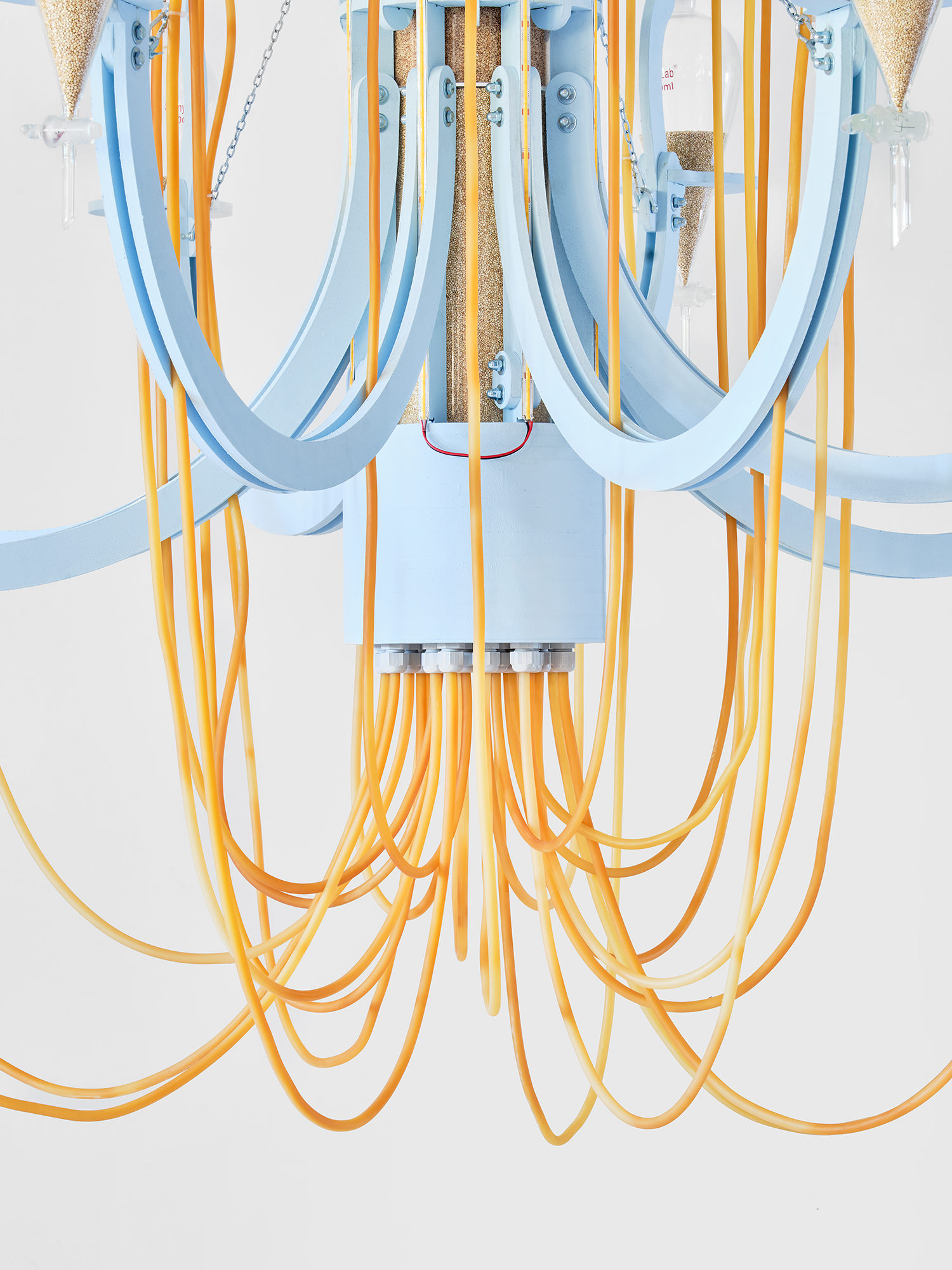
In the same way that some species, such as bears or squirrels, disperse the seeds they carry in their fur, aiding their movement, “Migration Seeding Assistant” is introduced into the forest as an autonomous device for planting certain species and managing forests in times of accelerated climate change. This flying chandelier operates like a mobile seed bank, flying over remote and inaccessible areas that are challenging for human intervention. A chandelier carrying seed pods flies over the areas that are least accessible to humans, with the goal of preserving, protecting, and managing water usage, among other things.
In response, assisted migration has emerged as a viable solution. This approach involves introducing endangered species beyond their original ecoregions, to habitats where their survival prospects are higher, thereby preserving biodiversity and restoring ecological balance.
In the same way that some species, such as bears or squirrels, disperse the seeds they carry in their fur, aiding their movement, “Migration Seeding Assistant” is introduced into the forest as an autonomous device for planting certain species and managing forests in times of accelerated climate change. This flying chandelier operates like a mobile seed bank, flying over remote and inaccessible areas that are challenging for human intervention. A chandelier carrying seed pods flies over the areas that are least accessible to humans, with the goal of preserving, protecting, and managing water usage, among other things.
Architects:
TAKK, Mireia Luzárraga + Alejandro Muiño
Client:
Flanders Architecture Institute VAI
Exhibition:
Tamed Nature
Curators:
Bart Tritsmans, Hülya Ertas, and Dennis Pohl
With the support of:
Institut Ramon Llull
Photo:
José Hevia
TAKK, Mireia Luzárraga + Alejandro Muiño
Client:
Flanders Architecture Institute VAI
Exhibition:
Tamed Nature
Curators:
Bart Tritsmans, Hülya Ertas, and Dennis Pohl
With the support of:
Institut Ramon Llull
Photo:
José Hevia